“One day the great European war will come out of some damned foolish thing in the Balkans” – Otto von Bismarck (1888)
The earlier twentieth century did have a lot of talks about the outcome of the great European war – A War to end all Wars. This was derived from the ambitions of military leaders, waves of revolutionary sentiment and most importantly, feverish nationalism. The countdown of the Great war saw formation of many notable alliances.


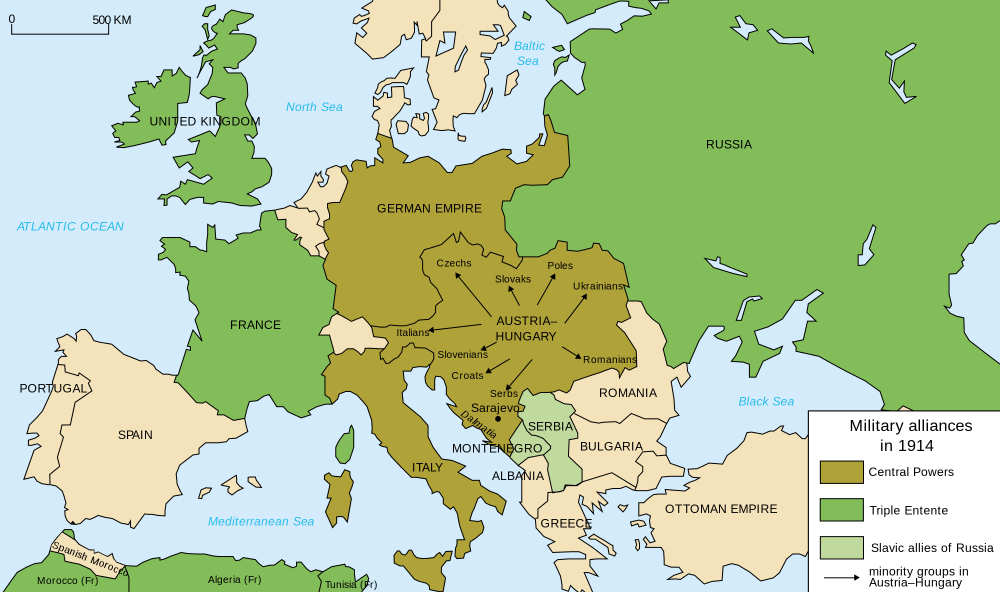
In the year 1871, after the victory of then Prussia over France in the Franco-Prussian War, Germany had established itself as the leading power in Europe. In fact, by 1914, Germany had become the cultural capital of Europe and had almost replaced England as the industrial giant. The ambitions of a multinational German Commonwealth had taken roots. The idea was not far-fetched. The north African colonies and India were run from Europe and the Chinese and the Ottoman Empires were on a verge of collapse. What Germany needed was an ally, which it found right in its neighbourhood, a large country with a huge German-speaking population – the Austro-Hungarian Empire. Germany had been allied with Austria since 1879, however, there was a huge problem with the Austro-Hungarian Empire – it’s shakiness and instability. The sense of nationalism in Austro-Hungarian Empire was weak. The country had 15 versions of its own national anthem. The Emperor Franz Joseph was an out-of-place, 84-year-old ruler who was infamous for making extremely questionable decisions. The Bosnian Crisis of 1908-09 ended up as a popular example of Austria’s recklessness. This event, known as the first Balkan Crisis, happened right after the Bulgarian declaration of Independence from the Ottoman Empire. It resulted in Austria annexing the territories of Bosnia and Herzegovina, which were also the territories of the Ottoman Empire. This earned huge protests from the Great Powers of Europe and terminally damaged the relations of Austria with its neighbours Serbia and Montenegro. A great sense of prejudice was developed against the Austro-Hungarian Empire amongst the Slavs and the Balkan nations. Austria simply ignored the protests. Secondly, the Austrian government was severely low on money. They spent less on their army than England did, even though their army was ten times the size. Germany, hence, formed an alliance with a more stable country of Italy, who had recently lost its North African ambitions to France, and thus ‘the Triple Alliance’ of Germany, Austro-Hungary and Italy was formed – dated 20 May, 1882. Otto von Bismarck, the then Chancellor of Germany chose these two nations to avoid wars on either fronts. King Carol I of Romania, for his own ambitions of Romanian stability and for having a German ancestry allied his kingdom with the Triple Alliance in 1883. Germany had good ties with Russia in the earlier years of Bismarck’s office but that was long gone. It also had good relations with the Ottoman Empire, which would be strongly against the Austro-Hungarian Empire after the onset of the Bosnian Crisis.
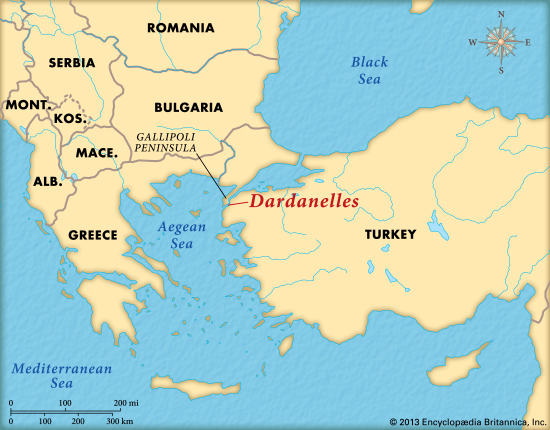
The French relations with Germany had been strained for a long time. The Franco Prussian War of 1870 made it even worse. Russia had Balkan ambitions and wanted to establish its influence over the Slavic nations. A German alliance with Ottoman Empire would be a true Russian nightmare as it would grant Germany the charge of Dardanelles, through which Russia sent 90% of its wheat exports. The discontent of the growing strength of the German Empire and the formation of Triple Alliance aligned the foreign policies of France and Russia and led to the Franco-Russian Alliance in 1894. Russia also formed an alliance with Serbia, which made it collide with both Austro-Hungary and the Ottoman Empire.
“The greatest mistake made in the 20th Century was when Germany made a navy designed to attack England.” – Norman Stone, historian.
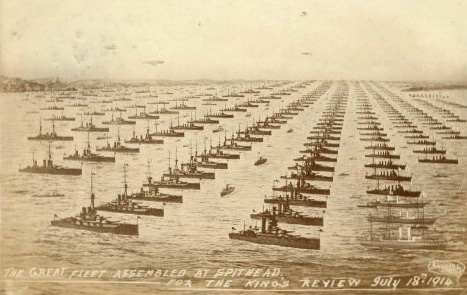


The British relations with France had been strained for over a century, since the Napoleonic Wars in 1815. For a better part of the 19th Century, British had maintained its foreign policy of ‘splendid isolation’, however it changed after the Second Boer War that ended in 1902. British feared that the isolation would be disastrous in face of an aggressive Germany. The Scramble for Africa had disabled a France-England alliance for a long time. The Germans and the British had admired each other culturally, industrially and militarily. Germany especially admired Britain’s huge overseas empire and its navy – the greatest the world had ever seen. The Kaiser, Wilhelm II ignored the will of its people of avoiding a war and their admiration towards Britain, and built a navy with the sole intention of challenging her. The Britain-German talks that were held between 1898-1901 collapsed and the British chose not to join the Triple Alliance. At this point England was firmly allied to Japan and France was firmly allied to Russia. However, when the Russo-Japanese war erupted in 1904, France and England both feared to be dragged into it. Hence, in 1904, they terminated their ancient rivalry and entered into the historic Entente Cordiale – a series of agreements signed on April 8, 1904 and resolved all its territorial issues in Africa, Asia, America and the Pacific.

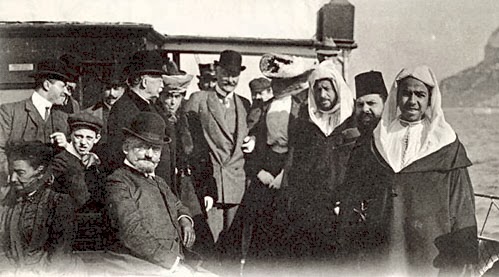
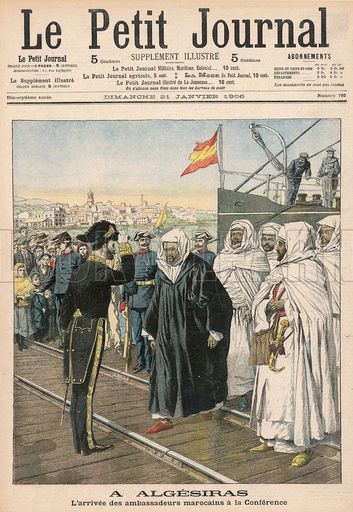
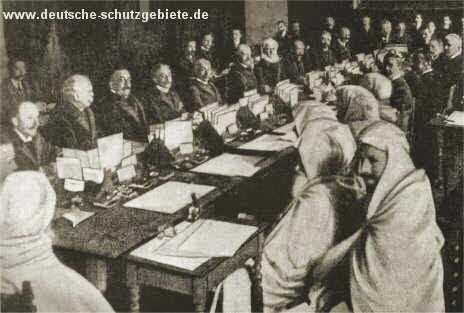
Kaiser Wilhelm II of Germany, in an attempt to ruin the French-Britain relations, visited the Moroccan Sultan Abdelaziz. He promised to support the sovereignty of the Sultan – a stance that made the French influence over Morocco tremble disastrously. Morocco then declined all the French suggested government reforms and called for a global council that was held in Algeciras, known as the Algeciras Conference. Held on January 16 to April 7, 1906, out of the 13 nations present, Germany received support only from Austria-Hungary. France on the other hand, received firm support from Britain, Russia, Italy, Spain and USA. On May 31, Germany signed their face-saving compromise. The Algeciras conference established the strength of the Entente Cordiale. The relations between the Entente and the Alliance worsened further after this incident.
The Entente Cordiale ended a century long British neutrality in Europe. It was soon followed by the Anglo-Russian Entente of 1907 where England and Russia settled its disputes in Tibet, Afghanistan and Persia and entered into an agreement. This led to the formation of the Triple Entente – Britain, France and Russia. The Great war would be fought between the Triple Alliance and the Triple Entente.
As stated earlier, the Austrian annexation of Bosnia and Herzegovina had earned it the wrath of many countries, especially Serbia, who was denied an Adriatic Port in a majority Slavic region. The Slavs had long dreamt of a Pan-Slavic nation, an ideology that was further pushed by Russia to establish its influence in the region. The majority of these Slavic nations like Bulgaria, Serbia and Montenegro had been a violently oppressed part of the Ottoman Empire, and were recently independent. The Austrian aggression over these countries earned it a severe criticism from those nations. Serbia was the most noisy of these. It had earned its independence from the Ottoman Empire in 1878 and it was a young and proud nation. Serbia was also fiercely nationalistic. It’s catchphrase – “Where dwells a Serb, there’s a Serbia” wasn’t stomached well by the European Nations however. The ambitions of a Pan-Slavic nation were only possible if it could take down Austria for good, which would have required a war. However, this would never have been possible if Serbia didn’t have an ally, as its population was a mere 5 million. Serbia also ended up oppressing its own ethnic minorities, particularly the Muslims and hence did not receive any international sympathy either. The cycle of violence and terrorism grew in Serbia and its neighbouring nations.
Seeing the Moroccan crisis of 1905 unfold, Italy correctly concluded that Germany, France and England would do nothing to stop her from advancing and capturing the Ottoman lands that were being handed out – like Morocco to France and Egypt to Britain. Italy declared war on the Ottoman Empire, in which they successfully defeated them within a month and annexed Libya. Seeing how even the weakest of the European powers can defeat the Ottoman Empire, the Balkan Nations of Serbia, Montenegro, Greece and Bulgaria assembled and with the influence of Russia attacked the Ottoman Empire in the first Balkan War. This newly formed Balkan league successfully drove out the Ottomans from the Balkans for the first time in 5 centuries. However, Bulgaria, unsatisfied with the distribution of the post war territories, declared war on Serbia and Greece. In the Second Balkan War, Serbia conquered Albania and finally got it’s own sea port. However, Austria issued an ultimatum to Serbia commanding them to remove all troops from Albania within 8 days, to which Serbia complied. At the end of the Balkan wars, Serbia had doubled its territories which got them to the zenith of their nationalism and established their pro-war status, since it was working out pretty well for them. This however resulted in further Serbian alienation and thus it was the only Balkan state left that was allied to Russia. Hence, for Russia, to keep its Balkan interests, it would have to support Serbia unconditionally.
By June 1914, Germany and Austria were concerned over the expansive nature of Serbia and Austria decided to put its foot down to curb the rise of any Slavic nationalism. Russia, after failing to support Bosnia and Herzegovina and after losing to Japan in the Russo-Japanese War of 1905 put its foot down on preserving all of its territories to save its face. Thus, we see, by June 1914, all countries had developed strict and brittle foreign policies. And then, one bullet changed it all!
Next Edition – The Black Hand and the Assassination of Archduke Franz Ferdinand
Stay Tuned!
 तीन Half, एक Full