“It’s one small step for man, one giant leap for mankind”
– Neil Armstrong, July 20, 1969, from the Moon.
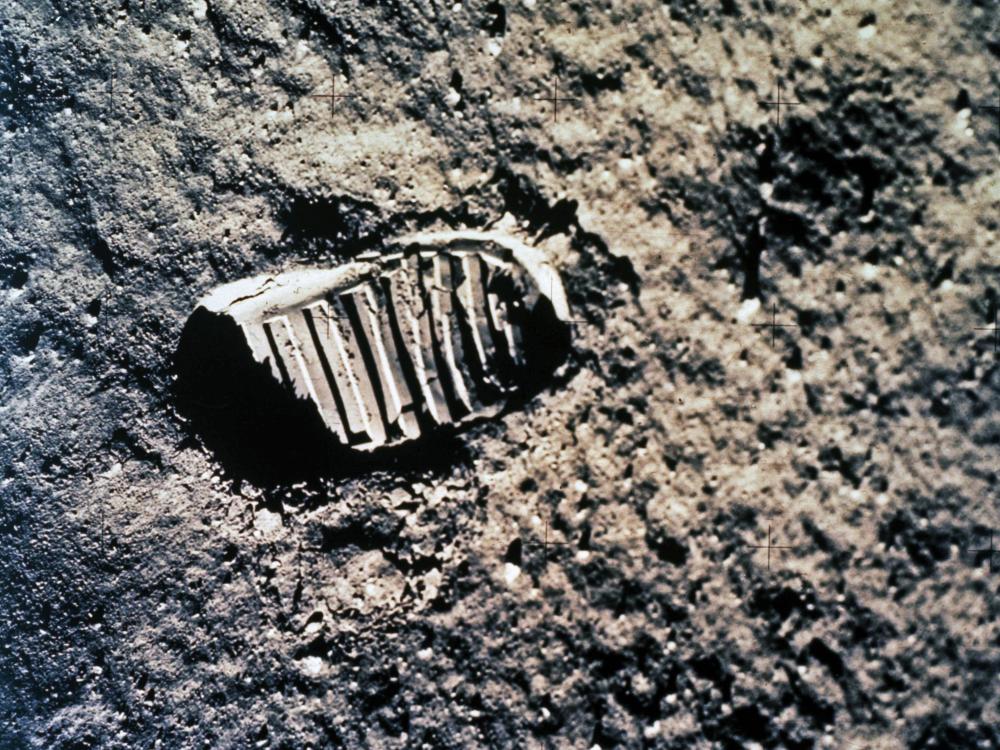
Earth, birthplace and home of mankind. This phrase is a mere burlesque version of our present state of being. Of the over 4.5 billion years of the existence of our planet, we have inhabited it for a mere 200,000. The human civilization as we speak has been around for just 6000 years. And yet, out of all the creatures that have inhabited this planet before, it is we who’ve brought the most change to it.
The dawn of the era of mankind will truly begin with the formation of civilization , which in turn is a result of the discovery of agriculture. Our species, for long have celebrated agriculture for it transformed us from a bunch of hunters and gatherers to a bunch of ‘civilized’ individuals. This helped us to settle down, regulated our lives and enabled us to tap the true potential of our intelligence. It was after this shift in paradigm of human life that we created and formulated language – which in my personal view remains our greatest achievement till the July of 1969. It was this time when we made significant growth in the fields of Mechanical and Civil Engineering with the construction of houses, dams, roads and Pyramids & also in fields of mathematics and computation with creation of number systems, calendars and abacus – which is believed by many to be the first computational device.


However, considering all these achievements that took place in different parts of the world, at different points of time, there are several critical debates that have presented substantial arguments against the creation of civilization and agriculture which domesticated man. The concept of civilization created a dichotomy among humans categorizing them as ‘civilized’ and ‘uncivilized’ or ‘barbarians’. This dichotomy would remain a point of discrimination even to this date. The theme of basic human nature and it’s transformation due to civilization is primarily projected in the debate between Thomas Hobbes and Jean-Jacques Rousseau (Click here for reference). Hobbes argues that human beings by their very nature are barbaric and brutal and it was the formation of civilization that led to the betterment of human life. In contrast, Rousseau argues that our barbaric nature was one that was morally fair and it was civilization that created a status of inequality, corruption and greed among our species and put us on a moral rock-bottom where we stand today. Several historians also attribute agriculture to be a fallback in human growth, rather than the dawn of a glorious era. Jared Diamond, an American geographer calls agriculture as ‘The Worst Mistake in the History of Human Race’.
The arguments that I present in the above paragraph serve the reason of saying that people have rightly questioned what we believe as the foundation of our lives today. This gets more specific when we consider the debate over the Greek victory over the Persians in the Greco-Persian Wars. In lack of a Greek victory, democracy would’ve died in it’s crib and the system of governance that is of, for and by the people as we know today perhaps would have never existed. However, life under the Persian monarchy was better than what we see in the corruption riddled Greek city-states. History has an important job of being subjective in it’s approach and objective in it’s presentation and documentation. It is in my belief that a proper grasp of the truth can only be achieved if we look at the global decisions made by mankind in history from the point of view of the contemporary humans and analyze it from an unbiased perspective of the nature of the present.
The foundation of our lifestyle today is weak, if not crippled. It is weak in comparative sense of what may have been if our long ancestors chose a different way of life. It with this idea that all the questions mentioned above arise.
Now, coming directly to the point – I present to the readers my strong opinion that it was the historic landing of Apollo 11 with Neil Armstrong, Edwin Aldrin and Michael Collins on the Moon on July 20, 1969 at 20:18 UTC which shall stand the test of time as the greatest achievement of mankind.
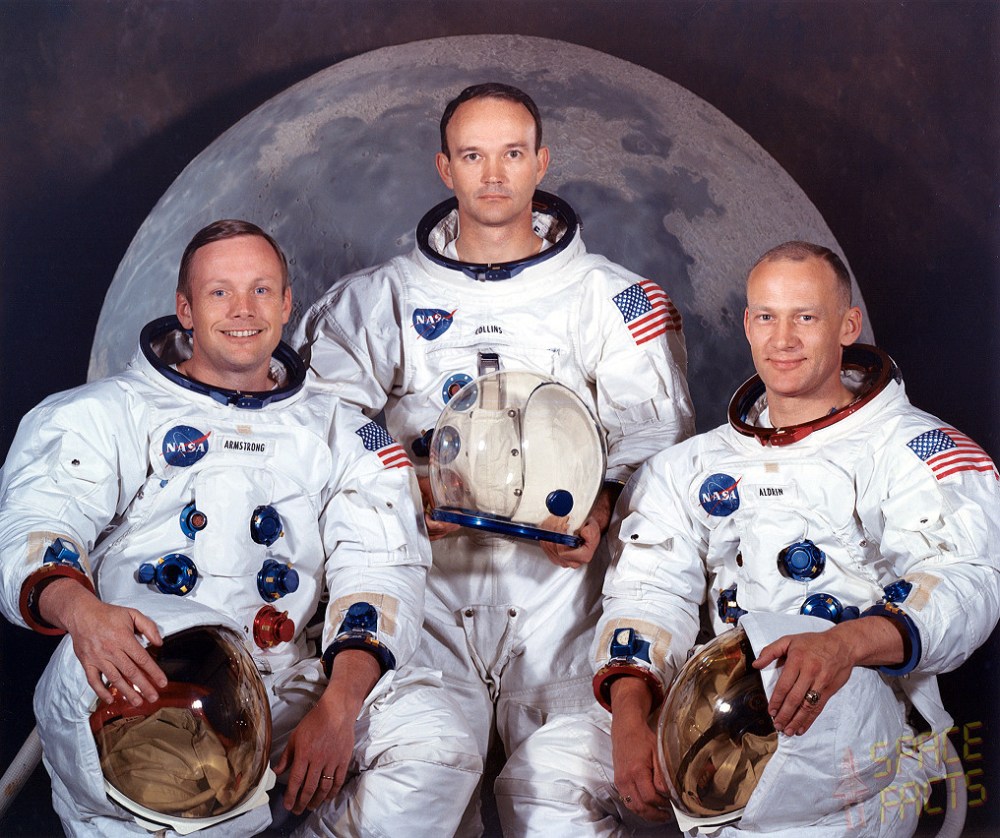
“Space, the final frontier”
– Opening monologue of Star Trek
This popular opening to Star Trek is close to my heart for several reasons. But in the context of the text, it was our brave leap into space – to go where no man has ventured before – that stands out as the greatest prerequisite of our greatest achievement to come further down the road. The brave acts of Yuri Gagarin and several Soviet astronauts that followed proved that our path cannot be restricted on a sphere located in the center and in the no-where of this Universe. However, there is something that is innately glorious about the Moon Landing that the previous human voyages into space lacked. It was touching that white ball in space that acted as an element of fantasy for writers and in fables, a testament of love and purity for the poets and as a simple awe-inducing object for the viewers of the night sky that added a sense of achievement to this voyage.
However, a lack of objectivity to this event would simply undermine all the previously presented arguments and points mentioned. One cannot simply deny the hidden motives and mysteries that surround this expedition that took place in the timeline when the Cold War was at its hottest. It is evident that there was indeed a space race between the United States and the Soviet Union which has resulted in the Moon Landings to be shrouded in an irritatingly large number of conspiracies. I shall not dwell into them but the prior notion is important to study to get an objective view. This case of Cold War is slightly on the line of Rousseau’s argument that civilization tenses the morality of man. It was the Cold War where we saw the development of three fractions of society – the First, Second and Third World, where the prior two believed themselves to be superior than other and not wanting the latter to stay unaligned. The mentioned Space Race was just another front of this war. So, why would any event that took place in the most grey area of our time even be close to our greatest achievement?
I’ll now increase the scope of objectivity from global to universal. And this simplifies our answer – it was after 13.8 billion years since the creation of Universe that a group of atoms, arranged and working in a way that they could voluntarily devise and manipulate the laws of the Universe left their confined region and landed on a new one, somewhere they weren’t meant to be. To put it in simply, mankind that was a specie who to that date was meant only to be on the Earth, left it in a great act of bravery and landed to a different body in space. It is symbolic because perhaps it was a rebellion against the Universe, or because indicative of the now established fact that we are or can be universal beings. It made all the decisions of our past, good and bad to be substantial and progressive for it were those decisions that made us who we are right now and enabled us to take a leap into the universe to write new stories, make new decisions, and most importantly to keep going on, for the Universe is infinite and is now accessible. It eradicated the question of ‘what would have been’ – the very question that made our current existence feeble for all the infinitely different roads that we would’ve taken would have all eventually lead us to the infinite realm of space, and no matter what, all of them would have converged at the moon at some point before diverging infinitely again towards the universe.
“Different roads sometimes lead to the same castle”
– A quote from George R. R. Martin’s A Game of Thrones
And for mankind, that castle which opened its gates to an infinite roads, was the Moon.
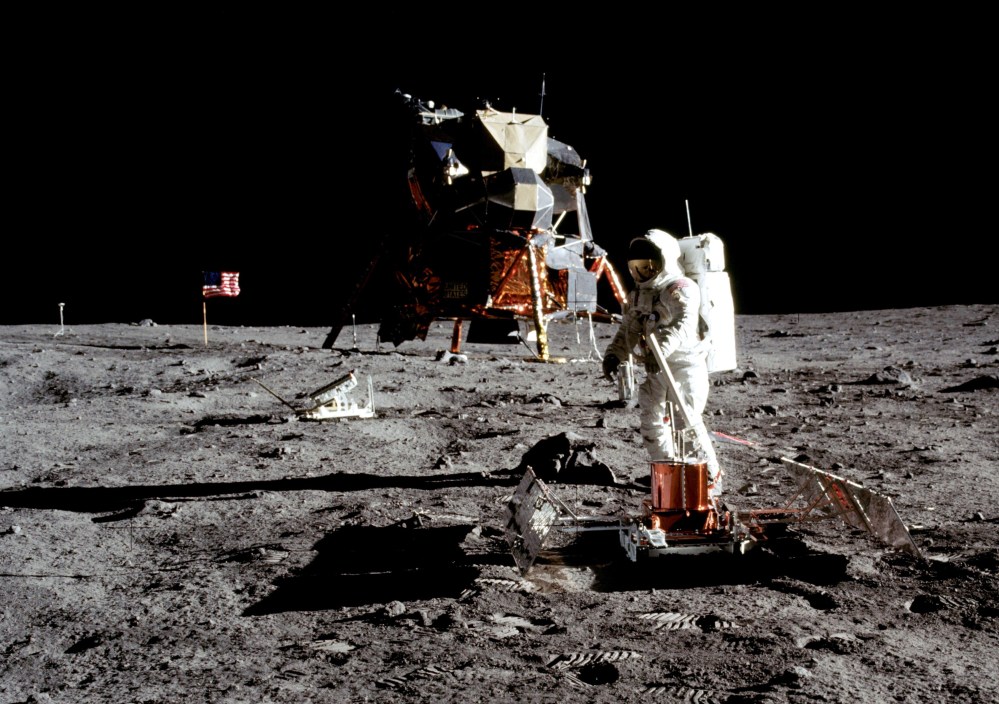
- Written on July 20, 2017 – the 48th Anniversary of the Moon Landing,
Neil Kulkarni
 तीन Half, एक Full
Brilaint writtn man!
“it was after 13.8 billion years since the creation of Universe that a group of atoms, arranged and working in a way that they could voluntarily devise and manipulate the laws of the Universe left their confined region and landed on a new one, somewhere they weren’t meant to be.”
wonderful lines
LikeLiked by 1 person